GFunded Prop Firm Review Rules, Fees, Payouts, Hidden Costs
Prop firm reviews can sound like they’re talking about two different companies. One trader shares a smooth payout, another gets denied after a rules check, and both can be true. That’s why a GFunded prop firm review only helps if you read it next to the rules, not the hype.
GFunded launched in 2021 and sells access to funded-style accounts after an evaluation (or via Instant Funding). The headline offers are easy to spot, account sizes often run from $10,000 to $200,000, profit splits can climb as high as 85% on some paths, scaling can reach into seven figures (often promoted up to $6.4M), and you can usually pick from TradeLocker, DXTrade, or Match Trader.
The real risk sits in the math and the fine print. Traders commonly trip on drawdown limits (often around a 4% daily loss and 6% max loss) and the details behind trailing vs static drawdown, plus payout rules like minimum trading days, consistency metrics, and KYC reviews. Add-ons and resets can also change the true cost after checkout.
This guide breaks down rules, fees, platforms, and payouts in plain English. It’s not financial advice, details can change by plan and region, and most trading happens on simulated accounts that can still pay real money.
What GFunded is really selling you (and what it is not)
When you pay GFunded, you’re not buying a “funded broker account” in the normal sense. You’re buying a rules-based trading program: pay a one-time fee (evaluation or Instant Funding), trade inside strict loss limits, then earn a share of profits if you follow the terms.
That’s why reviews feel split. If you respect the rules and your trades look clean, the experience can feel simple. If you miss one detail (drawdown math, minimum trading days, payout checks), it can feel harsh. The “product” is the rule set and how it’s enforced, not a promise that you’ll get paid just because you traded well.
Sim account, real payouts: how that setup works in plain English
GFunded (like most retail prop firms) runs the challenge in a simulated account. Prices move like a normal market feed, you place trades on their supported platform, and your PnL updates in real time. The difference is your orders aren’t routed to a live brokerage account under your name during the evaluation.
There are usually two big stages:
- Evaluation phase: You prove you can hit a profit target while staying inside limits like daily loss and max loss. Break a rule and the account can fail, even if your “idea” was right.
- Funded stage (often marketed as “cash funded”): You still trade in a sim environment, but payouts can be real if you meet the withdrawal requirements and pass the compliance review.
A sim can pay out because the firm isn’t paying you from “your trades hitting the market.” It’s paying you based on your performance under its program terms. That’s also why the details still matter a lot:
- Execution and slippage still affect results, especially in fast markets.
- Spreads and commissions can make a strategy look profitable on paper but fail in practice.
- The pricing feed behind TradeLocker, DXTrade, or Match Trader can change how candles print and how stops trigger.
Simple example: you buy an evaluation, trade for the required number of days, and reach the profit target without breaking drawdown rules. You move to the funded stage, build profit again, then request a payout inside the dashboard. Your request gets reviewed (rules, trade behavior, KYC), and if it checks out, you receive your share.
Quick facts people ask first: company age, typical account sizes, and where it may be restricted
A few basics clear up most confusion fast:
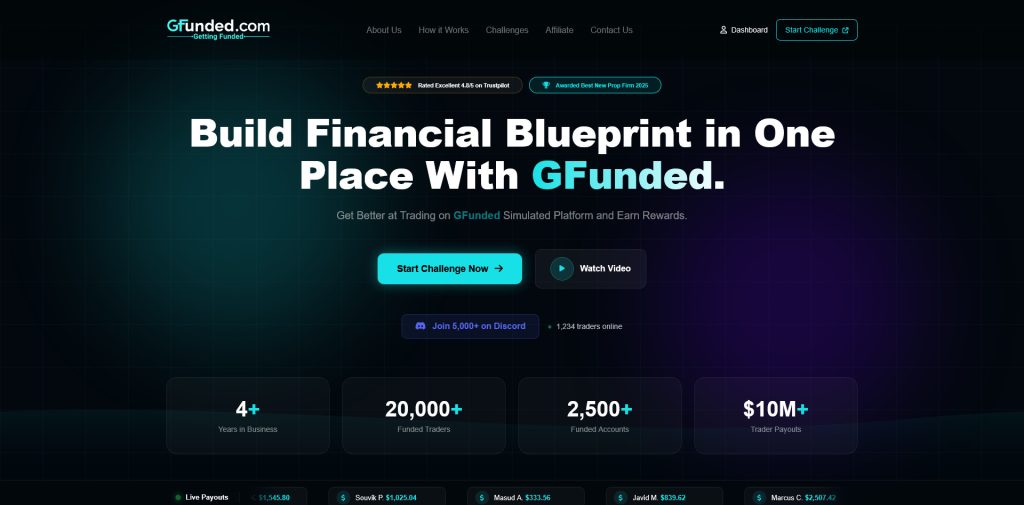
- Company age: GFunded is commonly described as launching in 2021.
- Typical account sizes: Most traders see options around $10K to $200K, with some promos or higher tiers sometimes advertised above that.
- Country restrictions: Access can change by region. Some sources report restrictions in the US and Canada in 2026, so don’t assume you’re eligible just because the firm is US-registered. Confirm inside the dashboard (and terms) before you pay.
Also keep expectations grounded: prop firms are usually not regulated like brokers. That doesn’t mean they’re automatically bad, it means you need to verify more yourself.
The trust checklist to do before you pay any challenge fee
Before you spend a dollar, treat this like a small due diligence project. The goal is to avoid surprises later, when you’re close to passing or requesting a payout.
Here’s the short checklist that prevents most headaches:
- Read the full rules (not marketing bullets), focus on drawdown type, daily loss math, minimum trading days, and payout conditions.
- Confirm the platform and data feed, since feed differences can change fills and stop-outs.
- Test spreads and execution on a demo or trial login (if offered), especially around the hours you trade.
- Save screenshots of key rules at purchase time, rules can change and you’ll want proof of what you agreed to.
- Look for recent payout proof across multiple places, not just one review page.
- Keep your own records (trade exports, dashboard stats, payout request confirmations).
Big scaling numbers sound exciting, but clear terms and consistent enforcement matter more when real money leaves the building.
Rules that decide if you pass or fail (most blow ups are math, not bad analysis)
With GFunded-style prop rules, you can be “right” on direction and still fail the account. The most common blow ups come from simple math: profit targets, daily loss caps, max loss caps, and how drawdown is calculated (balance vs equity, trailing vs static). If you treat the rules like a risk box you must trade inside, your strategy gets a fair shot. If you trade like it’s your personal account, the limits will feel unforgiving.
Profit targets and minimum trading days: why “no time limit” still does not mean easy
Most evaluation models revolve around a clear profit objective. Traders commonly see targets in the 6% to 15% range across the industry, and GFunded discussions often center on a 10% profit target for a 1-step style evaluation (some 2-step paths are split, such as 8% then 5%, depending on the plan).
The “no time limit” pitch sounds relaxing, but it doesn’t remove pressure. It just changes it. Instead of racing a 30-day clock, you’re managing two other forces:
- Minimum trading days (often 3 to 7 days) so you can’t pass on one lucky spike.
- Daily loss and max loss limits that punish rushing and oversizing.
Minimum trading days are there to prove repeatability. Many firms count any day with at least one trade as a “trading day” (even a tiny position), while some require a minimum profit for the day to count. Either way, the message is the same: passing should look like a plan, not a lottery ticket.
A realistic pacing example (using the common numbers traders mention):
- Account: $100,000
- Target: 10% (you need $10,000)
- Daily loss limit: 4% (you can’t be down more than $4,000 in a day)
- Max loss limit: 6% (you can’t be down more than $6,000 overall)
If you try to “just get it done” in two days, you’ll usually increase size, take lower-quality setups, and flirt with the daily cap. A calmer pace looks like this: aim for 0.5% to 1% on good days, accept flat days, and stretch the attempt over 10 to 25 trading days. You still finish with no time stress, and you keep plenty of room under the daily loss line if you hit a rough session.
Daily loss limit vs max loss limit: the difference that catches new traders
These two limits sound similar, but they behave differently.
Daily loss limit is your “one-day floor.” If you hit it, you fail even if the next trade would have been a winner. Many GFunded summaries cite daily limits around 4% (some plans vary). The daily limit typically resets at the firm’s server “day change,” often midnight server time.
Max loss limit (max drawdown) is your “account floor.” It’s the total loss allowed across the life of the account. Many rule summaries mention around 6% for this figure (again, plan-dependent).
Here’s the part that surprises people: intraday swings can trigger a daily breach even if the trade later recovers. This is most painful when the daily limit is based on equity (open profit and loss) instead of balance (closed trades only).
Simple scenario:
- Account: $100,000
- Daily loss limit: 4% (breach at -$4,000)
- You enter a trade with a wide stop, or no stop.
- Price moves against you and you float -$4,200 for a moment.
Even if price comes back and you later close green, the system may mark that dip as a daily loss breach. That’s why position sizing and stop placement matter more than being “right.” A clean way to stay safe is to size so a normal stop-out is boring, and so two losses in a row don’t put you at the edge of the daily line.
Trailing drawdown vs static drawdown: the rule that causes “surprise” breaches
This is where many “I was profitable and still failed” stories come from.
Static drawdown stays fixed. If max loss is 6% on a $100,000 account, your floor is $94,000, and it doesn’t move.
Trailing drawdown moves up as your account hits new highs. The limit can rise when your equity makes a new peak, but it usually doesn’t move back down when your profits fade. Some trailing systems also “lock” at certain points (for example, once you’ve built enough profit, the floor may stop trailing and sit at a safer level). You must read the plan’s exact wording.
Trailing drawdown gets extra risky when it’s equity-based, because a quick floating profit spike can pull the floor up, then a fast reversal can push you into breach. Volatility and overnight gaps make this worse because price can jump past your stop before you can react.
Concrete example:
- Account: $100,000
- Trailing max loss distance: $6,000 (for illustration)
- You run up to $106,000 equity after a strong move.
- The trailing floor steps up to $100,000 (peak equity minus $6,000).
Now you’re “up,” but you’ve lost breathing room. If the market reverses and your equity drops to $99,900, you breach, even though you’re basically back near where you started. That’s the trailing trap: profits raise the floor, then normal pullbacks can break it. The fix is not complicated, but it takes discipline: reduce size as you climb, take partials, and avoid holding oversized positions into volatile sessions or overnight if your plan’s drawdown is equity-based.
Common rule tripwires traders forget to check
Most account failures are still drawdown-related, but smaller rules can end a run too. Before you start, scan your plan for these common tripwires:
- Short-hold scalping limits: Some plans ban very short holds (for example, closing trades under 60 seconds) or certain high-frequency patterns.
- News rules and add-ons: News trading may be allowed on some plans, restricted on others, or require a paid add-on. Always verify the exact window and which instruments are affected.
- Copy trading and mirroring: Many firms restrict copying signals across accounts, trade mirroring, or using shared execution that looks like system-gaming.
- Hedging across accounts: Opening opposing positions across multiple accounts (or coordinating with others) often violates terms.
- Inactivity: A common rule is placing at least one trade every 7 to 30 days (often 30 days) to keep the account active.
- Consistency rules: Some plans use a “20% consistency” style rule, meaning one day (or one trade) can’t account for more than 20% of total profits in a payout cycle.
The best habit is simple: treat rules like the strategy. Save them, read how drawdown is calculated (equity vs balance), confirm whether max loss is trailing or static, then size trades so the limits never get a vote.
Pricing, refunds, and the hidden costs that change your real ROI
The fee you see on the sales page is only the start. Your real return depends on the path you choose (evaluation or Instant Funding), how many tries it takes you to qualify, and which extras you add at checkout. If you treat the fee like a “one and done” purchase, you can end up surprised when a reset, an add-on, or a platform charge shows up.
A good rule of thumb is to price this like a business expense. Plan for the base fee, then assume there’s a chance you’ll need at least one reset. That mindset keeps you in control, especially when the rules are tight and one mistake can end a run.
What you pay upfront: evaluation vs instant funding (and why instant costs more)
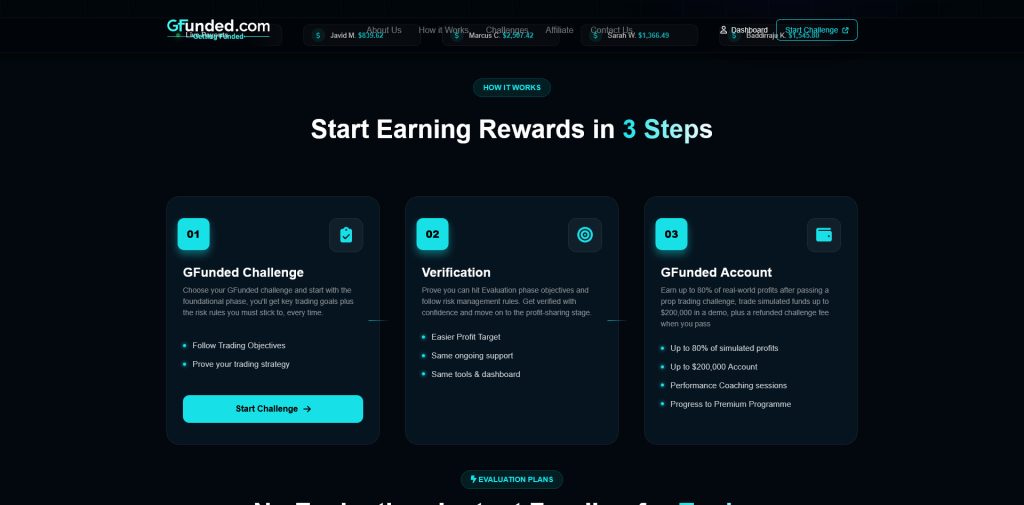
GFunded generally sells two ideas: pay less and prove yourself first, or pay more to start funded right away.
With evaluations, pricing commonly scales with account size. In many public summaries, you’ll see ranges like about $95 to $925 for $10K to $200K accounts (plan type and promos can change the exact number). The tradeoff is simple: you’re buying a shot at a funded stage, but you must hit the profit target while staying inside daily and max loss limits.
Instant Funding flips the order. You pay a lot more upfront because you skip the evaluation step. Some published Instant Funding examples show fees like $200 for 5K and $400 for 10K, and it can climb quickly as size increases. In return, you get access to a payout-eligible account right away, often with no profit target.
The part people miss is that Instant Funding can come with a different “tightness” in the rules:
- Drawdown can be stricter or calculated differently (some instant plans use their own daily and max loss numbers).
- Payout conditions may change, even if the marketing says “on demand.”
- You still need to trade clean, because payout reviews tend to focus on rule breaks and behavior.
Think of evaluation like a driver’s test and Instant Funding like a toll road. The toll road saves time, but you pay more for the shortcut.
Refunds, resets, and retakes: the costs people do not plan for
Refund language is where traders get confused fast. Many prop programs advertise “refundable fees,” but the refund is usually tied to performance and timing, not goodwill.
Common patterns traders run into:
- Refunds may only happen after payout milestones, not right after you pass. Some programs refund after a later payout (often after several payouts), so you may wait a while to “get your fee back.”
- Refunds often apply to the base evaluation fee only, not to add-ons, platform fees, or resets.
- Failing usually means paying again, either as a full repurchase or a reset.
Resets are the silent ROI killer. If you break a rule, the easiest way back is often a reset, and the reset fee can be a large chunk of the original cost. Across the prop space, it’s common to see retakes priced close to the first attempt, or only slightly discounted. If your plan’s daily loss limit is tight, that adds up quickly because you can fail from one oversize position, even with a good strategy.
Budget like this instead: assume there’s a real chance you’ll need two attempts. If paying twice would hurt, drop the account size and treat the first run as practice with real stakes.
Add ons and extra fees that can quietly raise the bill
Even if GFunded is marketed as a one-time fee, your checkout total can rise once you start clicking upgrades. These extras can be useful, but they change your break-even point.
Here are the add-ons that most often inflate the “real” price:
- News-trading permissions: If your strategy trades CPI, NFP, or rate decisions, a news add-on can matter. Without it, a single trade in a restricted window can put your account at risk.
- Faster payouts or payout upgrades: Some firms charge for shorter payout cycles or quicker processing.
- Higher leverage or higher profit split upgrades: These can look attractive, but they also tempt bigger sizing, which is exactly how traders hit daily loss limits.
- Monthly platform or data fees: Some programs charge a small monthly fee (often discussed in ranges like $15 to $30) for platform access or extras, even when the plan itself is “one-time.”
The best way to avoid surprises is boring but effective: read the checkout page and the rules side by side before you pay. If an add-on changes what’s allowed (news windows, holding over weekends, payout timing), treat it like a rule change, not a nice bonus.
If you have questions about document handling during KYC or payout reviews, you can contact GFunded’s Data Protection Officer at privacy@gfunded.com. This is also useful if you want to confirm how long files are kept and what’s required.
Platforms, markets, and trading experience: what it feels like day to day
Day to day at GFunded often comes down to two things: which platform you’re actually assigned, and the trading conditions on that setup (spreads, commissions, and how stops fill). That’s why reviews can sound inconsistent. One trader gets clean order handling, another fights spread spikes or awkward partial closes.
Treat the platform choice like choosing your workbench. If the tools don’t match how you trade, mistakes show up when you least can afford them (especially with tight daily and max loss limits).
TradeLocker vs DXTrade vs Match Trader: how to pick the best fit
TradeLocker is the simplest of the three for many traders. The interface stays clean and minimal, and it tends to feel comfortable on a phone or tablet. The big day-to-day benefit is speed of action, one-click trading and chart-based order handling can reduce “extra clicks” when price moves quickly. It’s a good fit if you trade discretionary setups and want fewer distractions.
DXTrade usually makes sense if you want a more “broker-style” ticket and broader market coverage. It’s often described as structured, with strong order management, and it can be a better home for traders who like to see margin and position details clearly. If you trade more than just forex (or want that option), DXTrade is often the most flexible.
Match Trader often lands in the middle, modern layout, solid charting feel, and an execution flow that many traders like for active trading. It commonly includes built-in TradingView charts, which is great if your edge depends on clean technical analysis. Some traders also prefer it because it feels quick and app-like across devices.
One practical point: don’t pick based on what looks cool. Pick based on what you do most, fast entries, quick stop edits, partial closes, and closing positions during volatility. Also, many traders show up expecting MetaTrader. MT4 and MT5 are usually not part of the standard experience, so confirm what your plan supports before paying.
What you can trade and what is commonly restricted
Most GFunded plans people discuss are CFD-focused. The typical market list looks like:
- Forex pairs
- Indices
- Metals
- Commodities
- Crypto (usually as crypto CFDs)
That mix works well for traders who like liquid majors, index moves, or crypto volatility. It’s not built for long-term stock investing or options strategies.
On the restrictions side, firms like this usually clamp down on behavior that looks like system abuse. Commonly mentioned examples include arbitrage-style tactics, tick scalping, and ultra-short hold times (sometimes framed as a minimum time in trade). High-frequency patterns and certain news-based approaches can also be restricted unless your plan explicitly allows them.
Rules vary by plan, so keep it simple: confirm the prohibited practices list for your exact account type (evaluation vs instant funding, and any add-ons). Many plans also allow weekend holding, which matters if you swing trade.
Execution, spreads, and slippage: how to test conditions before risking a fee
Even with a solid platform, conditions can change fast. Spreads can widen around major news, rollover, and thin-liquidity hours. Slippage can show up on market orders and stop-losses when price jumps. None of that is unusual in CFDs, but it hits harder under strict drawdown rules.
Before you risk a real fee, run a quick, boring test that tells you what you need to know:
- Trade the smallest size possible on a demo, trial, or the smallest evaluation.
- Record the average spread on your top 3 symbols at two different times of day.
- Place a trade with a stop-loss and take-profit, then watch how they trigger during a normal session.
- Re-check spreads during a high-volatility moment (major news or a sharp market move).
- Note anything that affects your style: partial closes, stop edits, and how fast you can flatten a position.
If the platform feels clunky or the costs crush tight stops, that’s your answer early, before the rules make it expensive.
Payouts and withdrawals: what to expect and how to avoid delays
Payouts are the part everyone cares about, and also where most frustration shows up. With GFunded, you’re not just clicking “withdraw” and waiting. Your payout request triggers a checks process, and your timing and record-keeping can make it smooth or messy.
In plain terms, the usual flow looks like this: you meet the payout requirements (profit, minimum trading days, and any consistency metrics), you submit the request in the dashboard, you complete KYC (if you haven’t already), the firm reviews your account for rule compliance and trade behavior, then the payment is sent. Some traders report payouts landing fast (often around 2 business days), while others report delays when extra checks kick in. The difference is often paperwork, plan rules, or trades that look “off” right before the request.
Payout rules that matter most (profit split, consistency, minimum days)
Start with the profit split, because it shapes your expectations. GFunded splits can be high at the top end (often cited up to 85%), but many paths start lower and improve after milestones, scaling steps, or multiple payouts. In other words, don’t assume you’ll get the headline split on day one. Check your exact plan, and don’t forget that add-ons or account types can change terms.
Next is the rule that quietly changes how you trade: consistency. Many prop firms use a “one day can’t carry the whole period” metric. A common version is a 20% consistency cap, meaning your biggest profit day can’t be more than 20% of your total profit in that payout cycle.
Why it matters: if your strategy relies on occasional big wins (news spikes, breakout days, or heavy scaling), you can hit the profit requirement and still not qualify to withdraw. You might need more smaller green days to “smooth” the stats before the dashboard lets you request.
Finally, pay attention to minimum trading days. Even if you hit the profit number early, you may still need a set number of active days before a payout is allowed. It’s designed to stop one lucky trade from turning into a withdrawal.
Before you build a plan around payouts, confirm three things inside your rules: starting split, how it increases, and whether your plan uses a 20% consistency cap (or similar).
KYC and review checks: what to prepare before your first withdrawal
KYC is where a lot of first payouts slow down, mainly because traders wait until the last second. If you want fewer delays, treat KYC like setting up your account, not like a final chore.
Have these items ready before you ever request a withdrawal:
- Government-issued photo ID (passport, driver’s license, or national ID)
- Proof of address (usually a utility bill or bank statement from the last 3 months)
- Matching payment details (your name should match across your GFunded profile and payout method)
- Clean trade logs (so you can answer questions fast if anything is reviewed)
Also keep your own “payout folder.” If there’s any dispute or manual review, having clean records helps you respond in minutes instead of guessing.
Save:
- Screenshots of key dashboard metrics (drawdown, equity, balance, profit)
- Your payout request confirmation
- Weekly exported trade history (get in the habit while trading, not after the fact)
If you have questions about document handling or privacy, there’s a direct contact for that: privacy@gfunded.com. Keep your email simple, ask what files they need, where to upload them, and how long they retain them.
Why payouts get delayed (and what you can do to reduce the risk)
Most payout delays come from predictable problems. The big ones are missing documents, a rule flag, or a last-minute change in trading behavior that looks like someone trying to game the system.
Common causes include:
- KYC issues: blurry photos, expired ID, mismatched names, or address docs outside the allowed date range
- Rule triggers: consistency metrics not met, minimum day requirements not met, or a drawdown rule hit during the period
- Unusual trade patterns: sudden oversized positions, rapid-fire entries, or “hail mary” trades right before requesting a payout
- Account discrepancies: different names, emails, or payout details that don’t align
You can’t control every review, but you can reduce the odds of getting stuck:
- Request payouts on business days, earlier in the day if possible. Weekend requests often sit longer.
- Keep your trading style steady once you’re near payout eligibility. Don’t switch from controlled risk to big swings to “get over the line.”
- Avoid last-minute risk spikes, especially if your plan uses trailing drawdown or equity-based limits.
- Respond fast if support asks questions, and attach your screenshots and trade export right away.
- Ask support what’s required before you request, not after. A 2-minute message can save days.
Think of the payout like a lease inspection. If everything looks normal and documented, it usually goes quickly. If something looks rushed or inconsistent, it tends to slow down.
Conclusion
GFunded is best understood as a rules-first prop program. You pay a one-time fee to trade a simulated account, then you can earn real payouts if you hit the targets and stay inside strict risk limits. The upside is clear pricing by account size, popular platforms (TradeLocker, DXTrade, Match Trader), and profit splits that can improve over time, but most bad experiences come from rule math, not “bad trades.”
This setup fits disciplined, risk-controlled traders who can respect tight daily and max loss limits, keep position size steady, and avoid big equity spikes (especially on trailing, equity-based drawdown). If you’re patient and consistent, the process can feel straightforward, including withdrawals that some traders report landing within a couple business days once KYC and consistency rules are met.
It’s a poor fit for gamblers, emotional traders, high-frequency scalpers, and anyone who won’t read the terms. One missed detail can end the account, even when your market call was right. Treat risk rules as the product, not the marketing.
Action checklist: confirm eligibility, pick evaluation vs Instant Funding, learn your drawdown math (equity vs balance, trailing vs static), budget for resets and add-ons, demo test spreads and execution on your platform, save dashboard screenshots and trade exports before payout requests.
Related Articles

Enter Headway Major League Demo Trading Contest
Forex Risk Management and Position Sizing What It Is

Rules for the OVX Markets $50 No-Deposit Trading Credit

Valetax $50 No Deposit Bonus Withdrawal Rules, Typical Terms

UTO Capital $50 No Deposit Bonus Rules Before You Trade